SBA Financing Versus Online Lending Compared
A repair shop with payroll due Friday does not have the same financing timeline as a contractor planning to buy a new piece of equipment next quarter. That is the real difference behind SBA financing versus online lending: one can deliver lower-cost, long-term capital for a well-prepared plan, while the other can help an established business move quickly when cash flow cannot wait.
Neither option is automatically better. The right choice depends on how fast you need funds, how much documentation you can provide, your credit profile, revenue, and what the capital needs to accomplish.
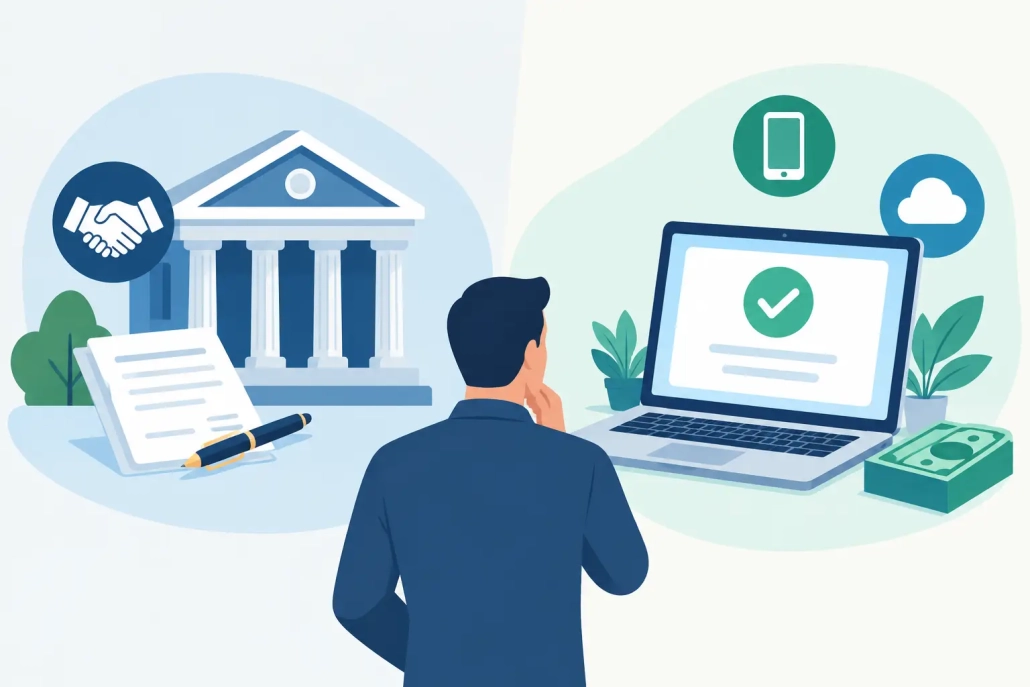
SBA Financing Versus Online Lending: The Core Difference
SBA financing refers to business loans made by participating lenders and backed in part by the U.S. Small Business Administration. The SBA does not usually hand a business owner a check directly. Instead, its guarantee reduces some lender risk, which can make longer terms and competitive pricing possible for qualified borrowers.
Online lending is a broader category. It can include term loans, business lines of credit, short-term financing, revenue-based products, and other working-capital solutions offered or arranged through online platforms and alternative financing providers. These options generally use a faster digital application process and may place more weight on current business revenue and operating history than a traditional bank would.
The trade-off is straightforward. SBA loans often reward patience, stronger qualifications, and a clearly documented use of funds. Online financing can prioritize speed and flexibility, but rates, fees, repayment frequency, and term length can vary significantly by product and borrower.
When SBA Financing Makes Sense
An SBA loan can be a strong fit when the investment has a long useful life and the business has time to complete a more detailed underwriting process. For example, a restaurant owner opening a second location, a trucking company purchasing equipment, or an established contractor refinancing expensive business debt may benefit from longer repayment terms.
Because repayment can be spread over more time, SBA financing may offer a more manageable monthly payment than a short-term option. That matters when a project will generate returns gradually rather than immediately. Buying a building, renovating a facility, acquiring a business, or making a major equipment purchase are common examples.
SBA financing is not only for large companies. Small businesses can qualify, but lenders commonly review personal and business credit, time in business, tax returns, financial statements, debt obligations, cash flow, and sometimes collateral. Owners may also be asked for a personal guarantee.
That level of review is not necessarily a drawback. For businesses with solid records and a strategic project, it can be worth the effort. But it is a poor match for an urgent cash need. If your delivery vehicle breaks down, inventory is selling out, or payroll is due within days, waiting through a longer approval and closing process can create a bigger operational problem than the loan solves.
SBA loans work best for planned growth
Think of an SBA loan as capital for a business decision you can document and defend. You know what you are buying, why it will improve the company, and how the business will support repayment over time.
A strong application usually starts before you apply. Clean bookkeeping, current tax filings, clear revenue records, and a specific funding plan can improve both your experience and your options. Businesses that wait until a cash emergency may find the SBA timeline too restrictive.
When Online Lending Makes Sense
Online business financing is built for operators who need an answer quickly. Many small businesses do not have the luxury of delaying a repair, turning down a large order, or waiting weeks to stock up before a busy season. An online application can often be completed without an in-person bank visit, and qualified businesses may receive offers much faster than through conventional channels.
For a salon replacing failed equipment, an eCommerce seller buying inventory ahead of a holiday rush, or an auto shop handling an unexpected lift repair, speed has real value. The cost of waiting can include lost sales, missed contracts, frustrated customers, and strained vendor relationships.
Online lenders and financing marketplaces may also be more flexible when a business owner has less-than-perfect credit. That does not mean qualifications do not matter. Revenue, time in business, average bank balances, existing obligations, and payment history still affect the offers available. However, a business with consistent sales may have options even if it does not meet a bank’s strictest credit standards.
Green Sea Funding helps established, revenue-generating businesses review financing options through a streamlined online process. That can be especially useful when the business need is immediate and the owner wants to compare available offers without a lengthy traditional-bank application.
Fast funding requires careful comparison
Fast financing should still be evaluated with the same discipline as any business decision. Do not focus only on the approved amount or the speed of deposit. Look at the total cost, payment amount, payment frequency, term, prepayment terms, collateral requirements, and whether the repayment structure fits your normal sales cycle.
Daily or weekly payments may work for a business with dependable daily receipts, such as a busy restaurant or retail operation. They can be harder to manage for a contractor paid after project milestones or a transportation company waiting on invoices. The best payment schedule is the one your cash flow can support in slower weeks, not only in your strongest month.
Compare the Factors That Affect Your Bottom Line
The fastest way to choose between SBA and online lending is to begin with the business problem, then compare the financing structure against it.
Speed: Online lending typically moves faster. Some qualified borrowers can receive a decision quickly and may be eligible for same-day funding after approval. SBA financing often takes longer because of its documentation, lender underwriting, and closing requirements.
Cost: SBA loans can offer attractive rates and longer repayment periods for qualified borrowers. Online financing can cost more, particularly when speed, credit challenges, or short-term repayment are involved. However, a lower rate is not always the lower-cost business decision if the slower funding timeline causes you to miss profitable work.
Qualification: SBA lenders often expect stronger credit, established operating history, documented cash flow, and detailed financial records. Online options can provide broader credit acceptance, with revenue and recent business performance playing a larger role in many decisions.
Funding purpose: SBA financing is often better for major, planned investments and long-term growth. Online financing can be a practical choice for working capital, inventory, repairs, marketing, seasonal gaps, equipment deposits, and other time-sensitive operating expenses.
Repayment: Long-term SBA loans generally provide predictable monthly payments. Online products may have shorter terms or more frequent payments. Review the actual payment schedule before accepting an offer, especially if your business has seasonal or uneven revenue.
Avoid Using the Wrong Capital for the Job
A common mistake is using short-term financing for a project that will not produce cash flow for a long time. If you finance a major renovation with frequent payments but the renovation will not increase sales for six months, the repayment pressure can hurt daily operations.
The opposite mistake is pursuing an SBA loan for a need that must be funded this week. A lower-cost loan does not help if the opportunity disappears before the funds arrive. For urgent needs, an online term loan, line of credit, or other working-capital solution may be the more practical choice, provided the payment fits your operating budget.
It can also make sense to use both approaches at different stages of growth. A company may use fast online financing to cover a short-term inventory gap, then pursue SBA financing later for a larger expansion once financial records and timing are in place. The key is matching the repayment period to the life of the asset or opportunity being funded.
Questions to Ask Before You Apply
Before choosing an offer, ask yourself whether the funds are needed now or can wait, whether the investment will pay back in weeks or years, and what payment your business can comfortably make during a slow month. Then ask the financing provider for clear answers about total repayment, fees, payment frequency, term length, prepayment options, collateral, and personal guarantee requirements.
Bring real numbers to the decision. Review your last several months of revenue, current obligations, expected expenses, and the income the financed purchase should create. If the capital will help you take on more jobs, estimate the added revenue conservatively. Financing should give your business room to operate, not force every dollar of new sales toward repayment.
The best choice is the one that supports the next move without putting the current business under unnecessary pressure. If you need capital quickly, compare offers based on the payment and total cost, not just the approval amount. If you have time for a longer process and a major investment ahead, prepare your records and see whether SBA financing can give that plan the runway it deserves.





Leave a Reply
Want to join the discussion?Feel free to contribute!