
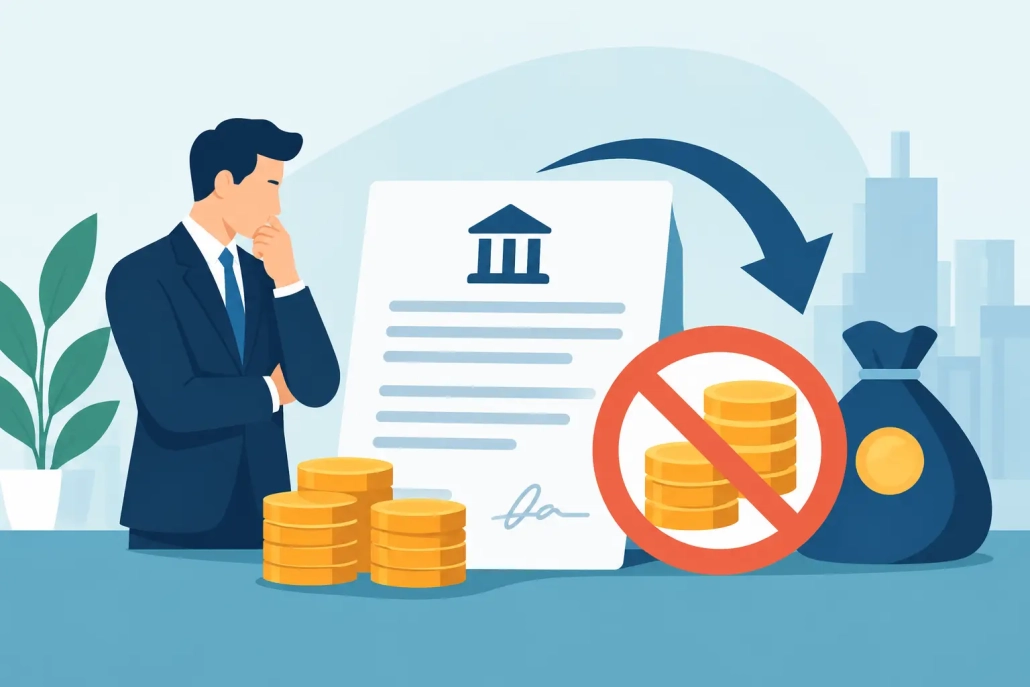
How Loan Prepayment Penalties Affect Businesses
A strong sales month can put extra cash in your business account. Paying off financing early may sound like the obvious next move, but loan prepayment penalties can change the math. Depending on the agreement, an early payoff could save interest, cost an added fee, or leave the payoff amount nearly unchanged.
For a restaurant owner after a busy season, a trucking company that lands a large contract, or an auto repair shop with a sudden jump in revenue, this detail matters. The goal is not simply to find financing you can qualify for. It is to choose a repayment structure that works if your business grows faster than expected.
What Are Loan Prepayment Penalties?
A prepayment penalty is a charge that may apply when a borrower pays off financing before the scheduled end date. Lenders use these charges to protect some of the return they expected to earn from interest or financing fees over the original term.
Not every business financing product has a prepayment penalty. Some term loans allow early payoff with no additional charge. Others use a declining payoff schedule, meaning the cost to pay early falls over time. Some agreements calculate a fee as a percentage of the remaining balance, while others require a set number of months of interest.
The name can be misleading. A document may not use the words “prepayment penalty.” Look for language such as early payoff fee, prepayment premium, minimum interest, exit fee, or required interest. The payoff provision, not the label, tells you what an early payoff actually costs.
Why the Details Matter to Cash-Flow Businesses
Fast financing can help solve a real operating problem: making payroll before receivables clear, replacing a broken truck, stocking inventory before a holiday rush, or covering a repair that cannot wait. But once the immediate need is handled, business conditions can improve quickly.
If your company pays off early, you want to know whether that decision frees up cash or creates an unnecessary expense. A lower stated rate does not automatically mean the lowest total cost if the agreement includes a substantial early payoff requirement. On the other hand, a financing option with no prepayment penalty may be worth considering if you expect to refinance, sell equipment, or pay down debt after a strong season.
This is especially relevant for businesses with uneven revenue. Construction companies, transportation operators, eCommerce sellers, salons, and restaurants often have months where cash flow changes fast. The repayment terms should make sense during both slower months and better-than-expected ones.
The Most Common Early-Payoff Structures
Business financing agreements can handle early payoff in several ways. A simple fixed fee is one approach. For example, the agreement may require a stated fee if you pay the balance in full before a certain date.
A declining fee is another common structure. The earlier you pay, the higher the fee; as the loan ages, the fee drops. This can make early payoff more attractive after the first several months.
Some loans use a minimum-interest provision. Under this structure, the lender may require you to pay a minimum amount of interest even if you repay the principal early. Other agreements calculate the fee as a percentage of the outstanding principal balance.
Short-term business financing may also have a fixed total repayment amount rather than traditional interest that falls as the principal is paid down. In that case, early repayment may not create much savings unless the agreement specifically offers an early payoff discount.
Merchant cash advances need a separate look. They are generally structured as a purchase of future receivables, not a loan, and their payoff terms can differ from a business term loan. Ask whether there is a reduced amount for early completion, how remittances are calculated, and whether slower sales could support a reconciliation request under the agreement.
How to Compare the Real Cost Before You Accept
Do not compare offers using the payment amount alone. A daily or weekly payment can look manageable while the total repayment, origination costs, and early-payoff terms tell a different story.
Start by asking for the full repayment amount and the estimated payoff balance at several points in time, such as 30, 90, and 180 days after funding. If the provider cannot give an exact number until later, ask how the payoff is calculated and what documents control the calculation.
Then compare that information against your plan for the capital. If you are buying inventory that should turn into sales within 60 days, a product that rewards early payoff may have more value than one that requires most of the scheduled cost regardless of timing. If you need predictable capital for a longer expansion project, a longer-term loan with stable payments may be the better fit.
It also helps to separate two questions: Can the business afford the scheduled payment? And what happens if the business wants to eliminate the obligation early? Both answers matter.
Questions to Ask Before Funding
Before you choose an offer, get straightforward answers to these questions:
- Is there a prepayment penalty, minimum interest requirement, or early payoff fee?
- Does the payoff amount decline over time, and can I see the schedule?
- Will early payoff reduce the remaining interest or financing charge?
- Are there origination, underwriting, lien, or closing fees separate from the payoff amount?
- Is the payment daily, weekly, or monthly, and can that frequency strain operating cash flow?
- If revenue slows, are there options for modified payments or reconciliation?
These questions are not a sign that you are difficult to work with. They are part of running a disciplined business. A clear financing provider should be able to explain the structure in plain language before you sign.
When Paying Early Still Makes Sense
A prepayment charge does not automatically mean you should keep a balance until the final payment. The right choice depends on the savings and the alternatives for your cash.
For example, paying off a loan may remove a weekly payment that is limiting your ability to take on profitable work. It may also improve your cash-flow position before applying for another financing product. Even if there is a fee, the benefit of removing the obligation could outweigh that cost.
In other cases, holding cash may be smarter. If early payoff would drain your operating account, leave you short on payroll, or force you to use expensive financing again next month, paying early may create more risk than value. A business should not use every available dollar to clear debt if that leaves no cushion for payroll, inventory, fuel, repairs, taxes, or slow-paying customers.
Compare the early payoff amount with the remaining scheduled payments. Then consider what the freed-up payment will do for your business and how much cash you need to operate safely. Your accountant or financial adviser can help evaluate the tax and cash-flow effects for your specific situation.
Read the Agreement, Not Just the Offer Screen
An offer is a starting point. The signed financing agreement is where repayment timing, fees, default terms, liens, personal guarantees, and payoff calculations are defined. Review it before funds are deposited, especially when the capital is needed urgently.
Look closely at the payment schedule and the section covering prepayment or payoff. If the wording is unclear, ask for a written explanation. Keep copies of the agreement, payment history, and any payoff quote you receive. When you are ready to pay in full, request a current written payoff amount and confirm how long that quote remains valid.
For SBA loans and other specialized commercial products, prepayment rules can vary based on the specific program, loan size, term, and timing. Do not assume that rules from one type of financing apply to another.
Choose Financing That Leaves You Options
The best financing is not always the offer with the fastest approval, the lowest advertised rate, or the smallest payment. It is the one that gives your business usable capital now without creating avoidable restrictions later.
At Green Sea Funding, business owners can compare working-capital options based on their revenue, timeline, and funding purpose. Whether you need capital for inventory, equipment, payroll, repairs, or expansion, ask how the payoff works before choosing an offer.
A smart financing decision gives you room to act when business is moving in the right direction. Before you sign, make sure an early payoff helps your next step instead of becoming an unexpected cost.





Leave a Reply
Want to join the discussion?Feel free to contribute!