
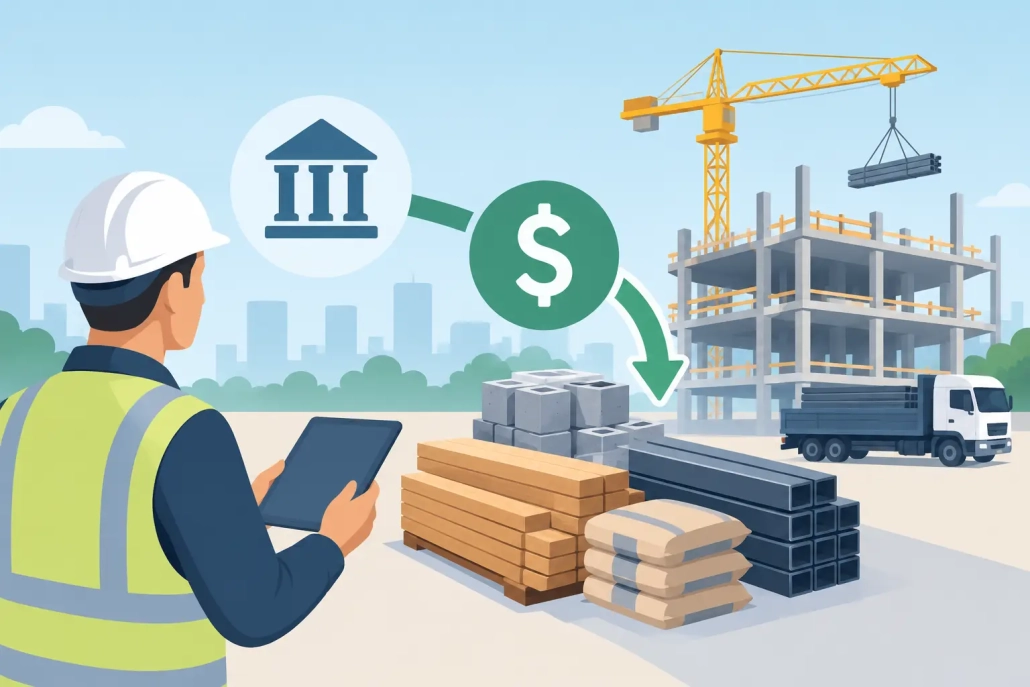
How to Fund Contractor Materials Without Delays
A signed contract does not always mean cash is in the bank. You may need to order lumber, roofing, concrete, fixtures, or equipment before the customer pays a deposit or before an invoice clears. Knowing how to fund contractor materials can keep a profitable job from becoming a cash-flow problem – and keep your crew from standing around waiting for supplies.
For established contractors, the best answer is usually not one funding method. It is a system: collect deposits when possible, match the financing to the job, and make sure repayment fits the timeline of your receivables.
Start With the Job’s Cash Timeline
Before choosing financing, map out when money leaves your business and when it comes back. Materials are often the first major expense on a project, while final payment may not arrive until inspections are complete, change orders are approved, or a general contractor releases funds.
Look at the material order, labor schedule, customer deposit, progress-billing dates, retainage, and expected final payment. A small kitchen remodel with a two-week turnaround calls for a different funding approach than a commercial build with 60- or 90-day payment terms.
The goal is not simply to get approved for capital. It is to avoid using expensive short-term funding for a job that will not produce cash for several months. Price the project with financing costs in mind, especially if the customer expects extended payment terms.
Use Customer Deposits to Cover Early Materials
A customer deposit is often the cleanest way to fund materials because it does not create debt or add a payment to your monthly overhead. For custom work, special-order products, and projects with significant upfront supply costs, a deposit also gives the customer a financial commitment to the job.
Your contract should clearly state the deposit amount, what it covers, when additional progress payments are due, and what happens if the scope changes. Many contractors structure payments around real project milestones, such as contract signing, material delivery, rough-in completion, and final walkthrough.
The right deposit depends on your market, contract terms, and local rules. Avoid treating deposits as free cash for unrelated business expenses. Keep enough set aside to order the promised materials, then use progress payments to support payroll and other job costs.
How to Fund Contractor Materials When Deposits Fall Short
Large projects can require more material than the initial deposit covers. A general contractor may also set the payment schedule, leaving subcontractors to carry costs until a draw is paid. In those situations, business financing can provide working capital while the job moves forward.
Business line of credit
A business line of credit is useful for recurring material purchases and short gaps between ordering supplies and collecting payment. You draw only what you need, then repay and reuse the available credit as your balance is paid down.
This can work well for contractors with steady sales, multiple active jobs, and predictable collections. The trade-off is that approval, limits, and rates depend on business revenue, credit profile, and lender requirements. Some lines may also have draw fees or variable rates, so read the repayment terms before relying on one for every purchase.
Short-term working capital
Short-term business funding can make sense when a job is already contracted, the material need is immediate, and you expect to collect within a relatively short period. It can help you place an order, keep a crew scheduled, or take on a profitable job that would otherwise exceed your available cash.
Speed is the main advantage. The main caution is payment frequency. Daily or weekly payments can pressure cash flow if your customers pay monthly or after project completion. Match the repayment schedule to your realistic incoming cash, not the optimistic version of the project timeline.
Business term loans
A term loan may be a better fit when you are financing a larger material package, building inventory for a busy season, or expanding into bigger jobs. With a set repayment schedule, you can plan the cost into your budget and project pricing.
Longer repayment terms can reduce the immediate payment burden, but they may increase the total cost of financing over time. Use this option for needs that will support revenue beyond one quick job, not just to patch a recurring pricing problem.
Supplier credit and trade accounts
Supplier terms can be valuable when you regularly purchase from the same lumberyard, distributor, or specialty vendor. Net terms may allow you to receive materials now and pay after the work has progressed or your invoice has been collected.
This option can be cost-effective, but it requires discipline. Late payments can hurt vendor relationships, reduce your purchasing power, and affect future access to terms. Do not over-order simply because a supplier account is available.
Equipment financing for equipment, not materials
If the cash shortage is tied to buying or repairing machinery, a truck, trailer, or specialized tools, equipment financing may protect your working capital for materials. Separating equipment costs from job supplies can make the business easier to manage.
Use the financing type for its intended purpose. Funding a long-life asset with a longer-term payment can be sensible. Funding disposable materials with the same long-term debt may not be.
Protect Your Margin Before You Borrow
Financing can help you accept more work, but it cannot fix an underpriced project. Before funding contractor materials, calculate the full cost of the job: supplies, delivery, waste, labor, subcontractors, permits, insurance, overhead, and the cost of capital if you are borrowing.
Material prices can move quickly. Build a contingency into estimates for volatile inputs and limit how long a quoted price remains valid. If a customer delays approval, you should not be forced to absorb a supplier price increase that erases your profit.
It also helps to separate material money from general operating money. Use job costing to see whether each project is carrying its share of expenses. When you know which jobs collect slowly or require heavy upfront purchases, you can request better deposit terms or choose a more appropriate financing option before the next contract is signed.
Prepare Before You Apply for Funding
Fast funding still requires accurate information. Lenders commonly review time in business, average monthly revenue, business bank activity, existing obligations, and the reason for financing. A contractor with imperfect credit may still have options when the business shows consistent deposits and active operations.
Have recent business bank statements, basic identification, your business details, and a clear funding amount ready. If the request relates to a specific project, know the contract value, material cost, expected completion date, and payment schedule. Clear numbers help you avoid borrowing more than the job can reasonably support.
When comparing offers, look beyond the funded amount. Consider the total payback, payment frequency, term length, prepayment policy, collateral requirements, and whether the payment will leave enough room for payroll, fuel, insurance, and supplier bills. The lowest advertised rate is not automatically the best choice if the structure does not fit your cash flow.
Green Sea Funding helps established businesses explore working-capital options for immediate operating needs, including inventory and materials. If you have an active business with revenue but need capital before a customer payment arrives, a straightforward application can help you review available offers and choose the one that fits the job.
Build a Material-Funding System for the Next Job
The strongest contractors do not wait for a cash crunch to decide how they will pay suppliers. Set a deposit policy, establish vendor relationships, maintain a cash reserve when possible, and keep a financing option available before you need it.
Review your accounts receivable every week. Follow up on unpaid invoices early, submit draw requests correctly, and document approved change orders before performing additional work. Faster collections reduce the amount you need to borrow and give you more control over which jobs you accept.
A material purchase should move a project forward, not put your entire business at risk. Fund the work with a payment structure you can handle, protect the margin you earned, and keep enough operating cash to deliver the quality your customers expect.




Leave a Reply
Want to join the discussion?Feel free to contribute!