
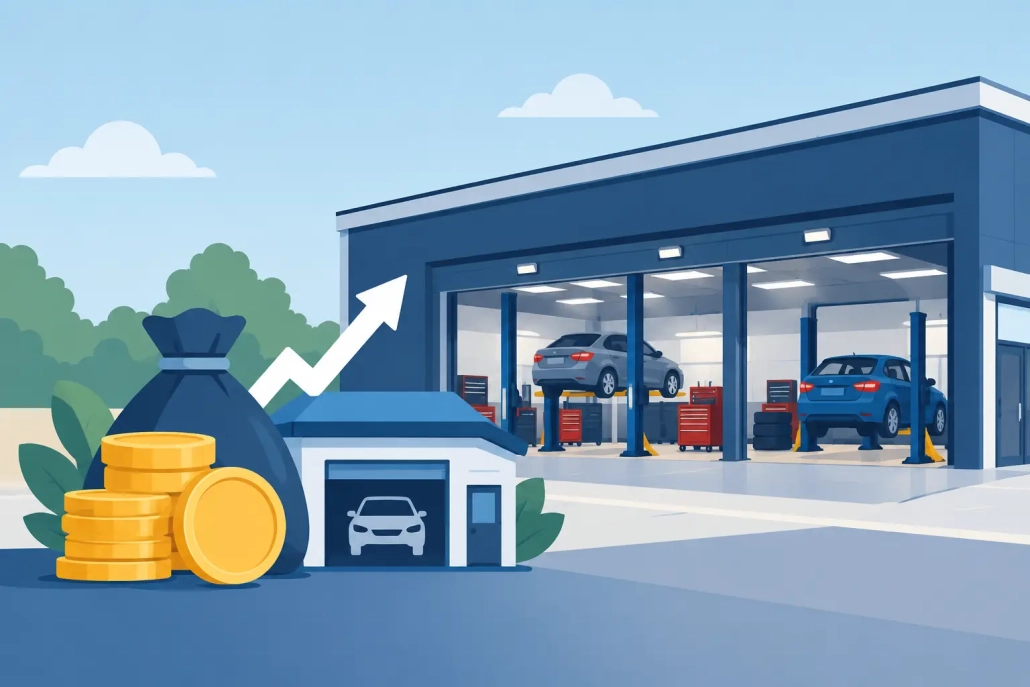
Auto Repair Expansion Loan Options for Growing Shops
A three-bay shop can lose more money turning work away than it would spend adding a fourth bay. When the schedule is full, technicians are waiting on a lift, and customers are booking a week out, an auto repair expansion loan can give you the capital to act before that demand goes somewhere else.
Growth in auto repair rarely happens one expense at a time. A bigger facility may require a lease deposit, buildout work, new diagnostic tools, additional lifts, parts inventory, and enough payroll coverage to bring on another technician before the new revenue fully ramps up. The right financing helps your shop make those moves without draining the cash needed to keep current operations moving.
When an Auto Repair Expansion Loan Makes Sense
Expansion financing works best when there is a clear business reason behind the request. Maybe your shop has steady demand for services you cannot currently perform, such as alignments, ADAS calibration, diesel repair, transmission work, or fleet maintenance. Maybe a neighboring unit has become available, or your current location has simply run out of productive space.
The goal is not to borrow because business feels busy. It is to borrow because the investment can produce enough additional revenue or efficiency to support the payment. A new lift, for example, can increase the number of vehicles your team completes each day. A better scanner may reduce diagnostic time and allow your technicians to take on higher-margin work. More parts on hand can shorten repair delays and improve customer satisfaction.
Expansion can also protect the business you already have. If customers are waiting too long for appointments, they may choose another shop. If your team is crowded into an inefficient workspace, quality and turnaround times can suffer. Financing may help solve those problems while positioning the business for more sales.
What an Auto Repair Expansion Loan Can Cover
Most established repair shops need flexibility, not a one-purpose loan. Depending on the financing product and lender requirements, expansion funding may be used for a mix of growth costs rather than a single purchase.
Common uses include:
- Adding service bays, lifts, alignment racks, tire equipment, compressors, and shop tools
- Buying diagnostic software, scan tools, ADAS equipment, or specialty repair equipment
- Renovating a waiting room, service counter, parking area, signage, or customer-facing space
- Opening a second location or moving into a larger facility
- Hiring technicians, service advisors, and front-office staff during the growth period
- Purchasing parts, tires, fluids, and other inventory needed to support higher repair volume
- Covering payroll, rent, utilities, and other working-capital needs while the expansion gains traction
Using capital for both equipment and working capital can be practical. A shop that spends every available dollar on a buildout may not have enough cash to stock parts or meet payroll during the first few months. On the other hand, funding too much working capital without a defined expansion plan can create a payment without a clear return. The best use of funds is tied to a realistic operating plan.
Match the Financing to the Expansion
There is no single best auto repair expansion loan for every owner. The right option depends on how much you need, how quickly you need it, what you are financing, your monthly sales, and your credit and business history.
Term Loans for Larger, Planned Projects
A business term loan can be a strong fit for a major expansion with a defined budget. This could include a second location, several lifts, a substantial renovation, or a large equipment purchase. You receive a lump sum and repay it over an agreed term, which can make budgeting easier.
Longer repayment periods may lower the individual payment, but they can also increase total financing cost over time. Compare the payment with the revenue your expansion is expected to generate, not just with the amount you can technically qualify to borrow.
Business Lines of Credit for Flexible Growth Costs
A line of credit can help when expenses arrive in stages. You may need funds first for permits and a deposit, then for equipment, then for inventory and hiring. Instead of taking the full amount all at once, you can draw funds as needed, subject to the terms of the account.
This option can be useful for protecting cash flow, especially in a shop where parts purchases and payroll change from week to week. However, it takes discipline. A line of credit should support planned growth, not become a permanent answer to an unprofitable operation.
Equipment Financing for Lifts and Tools
If the expansion centers on a specific asset, equipment financing may be worth considering. Lifts, wheel balancers, tire machines, alignment systems, compressors, and diagnostic equipment can often justify dedicated financing because they have a direct role in producing revenue.
Equipment financing may preserve other capital for labor, inventory, and facility improvements. The trade-off is that it may not cover every cost surrounding the purchase, such as installation, electrical work, training, or the extra operating expenses associated with bringing on a new technician.
Short-Term Financing for Time-Sensitive Opportunities
Some opportunities cannot wait for a lengthy bank process. A landlord may require a quick decision on an adjacent unit. A supplier may offer a limited-time deal on equipment. A fleet contract may require you to add capacity immediately.
Short-term business financing can provide faster access to capital for established shops with consistent revenue. Because repayment may be more frequent and the financing cost can be higher than longer-term options, it is most appropriate when the use of funds has a short, visible path to producing cash flow.
What Lenders Look At
Traditional lenders often place heavy weight on credit scores, collateral, and extensive financial documentation. Alternative business financing may also consider the sales performance and operating history of your shop. That can matter for owners who have strong revenue but imperfect personal credit.
Expect financing providers to review some combination of your time in business, average monthly revenue, recent business bank statements, credit profile, existing debt obligations, and the amount requested. A clear explanation of how the funds will be used can strengthen your application. “I need money to grow” is vague. “I need $85,000 for two lifts, electrical installation, inventory, and hiring one technician for our new bay” shows a lender how the capital connects to revenue.
Credit still matters, but it is not always the only factor. A prior credit issue or bankruptcy does not automatically mean an established repair business has no financing options. Revenue consistency, deposits, customer demand, and repayment capacity all help shape what may be available.
Calculate the Payment Before You Apply
Before taking expansion capital, estimate whether the project can carry itself. Start with the additional monthly costs: financing payment, rent increase, payroll, insurance, utilities, software, maintenance, and inventory. Then estimate the additional gross profit needed to cover those costs.
For example, adding a technician may create capacity for more labor hours, but only if the shop has enough car count and service-advisor coverage to fill that schedule. Adding an alignment rack may produce revenue quickly if customers currently leave for alignments elsewhere. The numbers are different for every operation.
Be conservative with your projections. Do not assume every new bay will be productive on day one or that every estimate will be approved. Build in time for construction delays, hiring challenges, training, and slower seasonal periods. A financing payment should be manageable even if growth takes longer than expected.
Prepare a Stronger Funding Request
A fast application is easier when you have your basic information ready. Know your requested amount, average monthly sales, time in business, current debt payments, and the specific expansion costs you plan to cover. Recent business bank statements and a simple list of equipment quotes, contractor estimates, or lease terms can make the request clearer.
It also helps to separate essential costs from nice-to-have upgrades. Prioritize the investments that expand capacity, improve turnaround time, or add profitable services. If the total project is large, consider whether it makes sense to phase it. Financing the highest-return portion first may reduce risk and allow the new revenue to help fund the next stage.
Green Sea Funding helps established business owners explore fast working-capital options across a range of financing needs. The process is built to be straightforward: apply, review available offers, and choose the option that fits your shop’s timeline and cash flow.
A growing repair shop should not have to choose between serving the customers already at the door and building enough capacity for the customers still to come. When the numbers support the move, the right funding can turn a crowded schedule into a durable next step for the business.





Leave a Reply
Want to join the discussion?Feel free to contribute!