
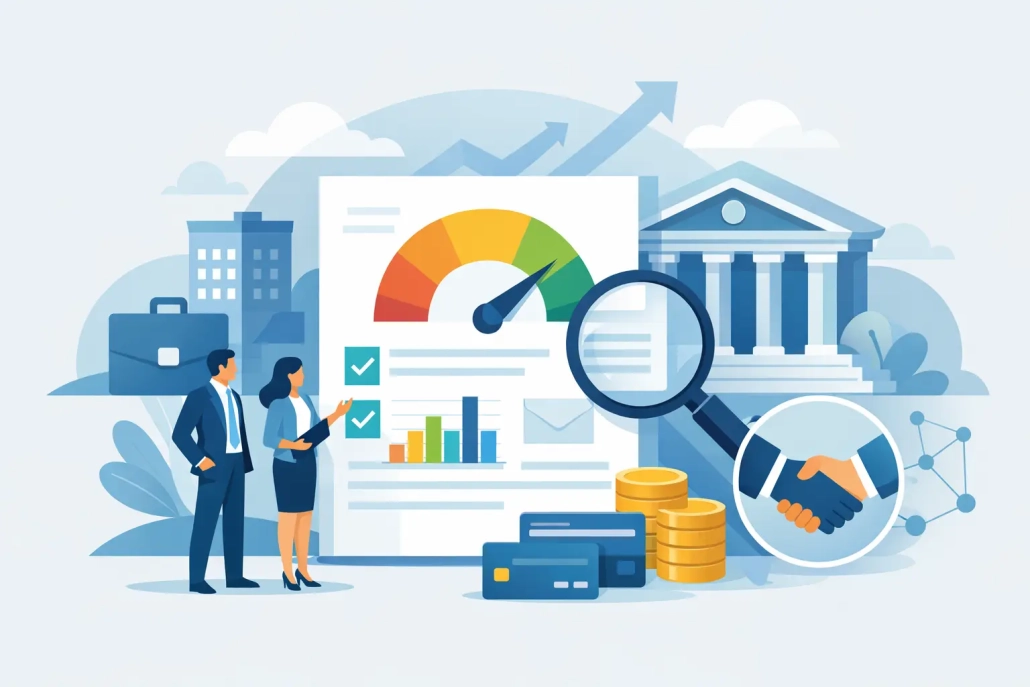
Business Credit: What Lenders Actually See
A truck transmission fails. A restaurant’s walk-in cooler stops cooling. A contractor wins a larger job but needs materials before the first customer payment arrives. In each case, business credit can affect how quickly an owner can access capital and what the financing may cost.
But it is not a single number that decides every application. Lenders often review a mix of business credit history, personal credit, monthly sales, time in business, cash flow, existing obligations, and the reason you need funds. Understanding that mix helps you prepare for financing without guessing what a lender wants to see.
What Is Business Credit?
Business credit is your company’s financial reputation. It reflects how the business has handled credit accounts, vendor terms, loans, leases, and other obligations reported under the company’s legal identity.
Unlike personal credit, business credit is tied to the business itself. A company can establish a separate credit profile using its legal business name, address, tax identification number, and business registration details. Depending on the reporting agency and account type, lenders may see payment patterns, balances, public records, years in business, and other indicators of financial reliability.
For many small businesses, personal and business finances still overlap. A lender may review the owner’s personal credit, especially when the business is newer, has limited credit history, or requires a personal guarantee. That is common, not a failure. The key is knowing which parts of your financial picture are working for you and which need attention.
Why Business Credit Matters When You Need Capital
Strong business credit can expand your options. It may help a qualified company pursue larger financing amounts, more favorable repayment terms, or lower pricing. It can also make certain vendors more comfortable extending payment terms, which can ease the pressure of buying inventory or materials upfront.
Still, business credit is only one part of the approval decision. A business with excellent payment history but declining sales may face different options than a business with average credit and steady, reliable revenue. For working-capital financing, cash flow often carries significant weight because it shows a lender how the business may support repayment.
This is why an owner should not assume one past credit event ends the conversation. A lower score, prior late payment, or even a bankruptcy can limit some traditional loan options, but alternative financing providers may evaluate the full operating picture. Consistent deposits, established customer demand, and a clear use for funds can matter.
What Lenders Usually Review
Every lender has its own criteria, but most review a practical combination of financial and operational details. They want to understand whether the company is active, whether it generates enough revenue, and whether the requested financing fits the business’s ability to repay.
Revenue and Cash Flow
For a repair shop, trucking company, salon, restaurant, or ecommerce operation, monthly sales can tell a more current story than a credit score alone. Lenders may review business bank statements or processing statements to confirm revenue patterns, deposit frequency, seasonal shifts, and existing payment obligations.
Revenue consistency matters. A seasonal business does not need identical sales every month, but it should be able to explain predictable slow periods and show how it manages them. If you are applying after a major dip, be ready to explain the cause, whether it was a temporary closure, delayed contract payment, equipment failure, or planned slowdown.
Time in Business
An established operating history gives lenders more information to evaluate. Businesses that have been open for several years usually have more records, customer patterns, and financial history than a brand-new company.
That does not mean newer businesses cannot qualify. It means the available products, amounts, and requirements may differ. A new company with strong sales may have options, while a longer-running company with unstable revenue may need to focus on a smaller or shorter-term solution.
Credit History and Existing Debt
Lenders may look at both business and personal credit depending on the product. They also consider current loans, cash advances, credit card balances, tax obligations, liens, or other recurring payments that affect available cash flow.
Be direct about existing financing. Trying to hide an obligation usually creates delays once it appears in statements or reports. A better approach is to explain how the current financing helped the business and why new capital will improve operations, such as replacing a high-maintenance vehicle, taking on profitable work, or purchasing inventory with proven demand.
Your Use of Funds
A clear request is stronger than a vague one. “I need $60,000 for payroll, inventory, and a new lift” gives a lender a more useful picture than “I need cash.” The purpose does not have to be complicated, but it should connect to a real business need.
Financing is often used for inventory, equipment, repairs, payroll, marketing, expansion, renovations, taxes, or short-term cash flow. The right product depends on the job. A long-term loan may make sense for a major equipment purchase, while a line of credit can be more practical for recurring operating gaps. For revenue that rises and falls with the season, flexible working capital may be more useful than taking on a large fixed payment at the wrong time.
How to Build Business Credit Over Time
Building business credit is less about one big move and more about keeping the company’s financial information organized and its payment habits consistent.
Start by making sure your legal business name, address, phone number, tax ID, and registration details match across bank accounts, licenses, vendor accounts, and financing applications. Small inconsistencies can create verification issues and slow down a funding request.
Next, separate business and personal spending as much as possible. Use a dedicated business bank account and keep clear records of income and expenses. This does more than support business credit. It makes it easier to understand true cash flow, prepare tax documents, and provide clean statements when you need financing quickly.
Pay business obligations on time whenever possible. Vendor accounts, commercial credit cards, equipment leases, and loans may contribute to your business credit profile if the provider reports payment activity. Before opening an account solely for credit-building purposes, ask whether it reports to business credit agencies. An account that is never reported may still help operations, but it may not build the record you expect.
Finally, do not overextend just to create a credit history. Carrying unnecessary balances can tighten cash flow and reduce your ability to qualify when a real opportunity or emergency arrives. The goal is not to collect credit accounts. The goal is to show responsible, sustainable use of credit.
Check Your Profile Before You Apply
Review your business credit reports periodically and dispute inaccurate information through the reporting agency when needed. Look for outdated addresses, accounts that do not belong to your company, incorrect payment statuses, or duplicate records. Errors can happen, and correcting them before an urgent funding need puts you in a better position.
You should also review your own recent bank activity. If deposits are scattered across multiple accounts, if there are frequent overdrafts, or if large unexplained withdrawals appear, expect questions. That does not automatically mean a decline, but clarity helps. Organize statements, identify major transactions, and know your average monthly sales before starting an application.
For many established businesses, the fastest route to an answer is to present a complete, honest picture from the start. Have your requested amount, purpose, time in business, average monthly revenue, and recent statements ready. That can reduce back-and-forth and help you compare offers based on repayment structure, total cost, payment frequency, and speed of funding, not just the approved amount.
Business Credit Is a Tool, Not the Whole Story
Good business credit gives you more leverage, but it should support the business plan rather than replace one. Borrowing to cover a short-term gap can be sensible when incoming revenue is reliable. Borrowing for inventory can make sense when demand is proven. Taking capital simply because it is available can create pressure if the payment does not match your margins and sales cycle.
When time matters, focus on the numbers that affect your operation next week and next month. Know what the capital will accomplish, what repayment your cash flow can support, and what documents tell the strongest story about your business. That preparation can help you move faster when the right financing opportunity appears.




Leave a Reply
Want to join the discussion?Feel free to contribute!