
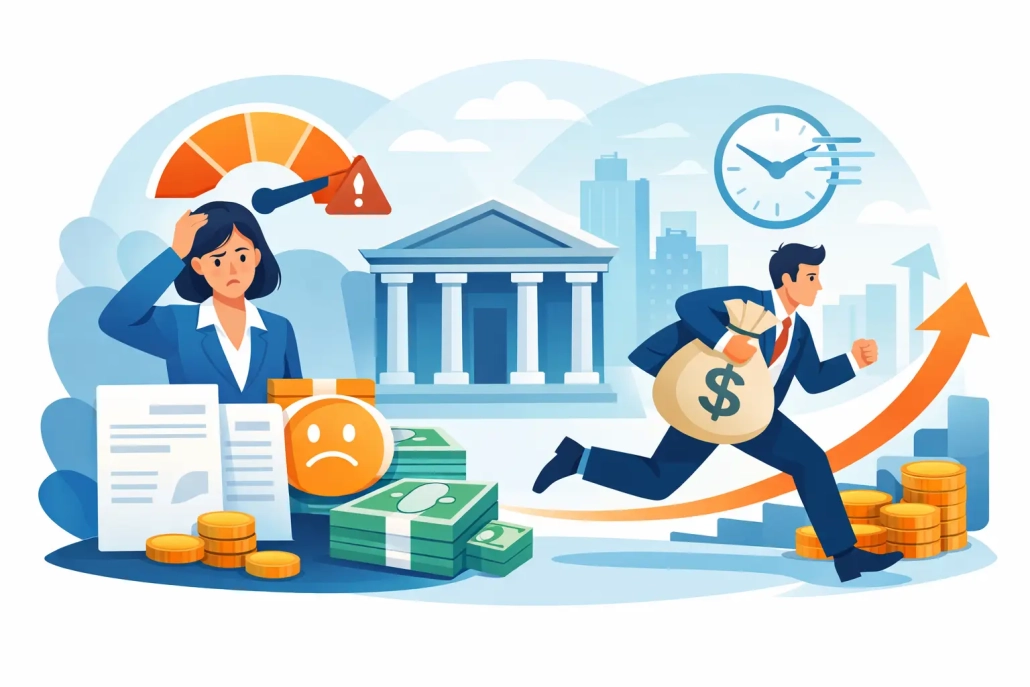
Bad Credit Business Loans for Fast Working Capital
A slow week should not stop a solid business from making payroll, replacing a broken truck, or stocking up before a busy season. Bad credit business loans give established companies another path to working capital when a bank focuses too heavily on a personal credit score or a past financial setback.
For many owners, the real question is not whether capital is needed. It is whether the business has enough steady revenue and operating history to support financing now. Alternative lenders often look at those factors alongside credit, which can create options for businesses that do not fit a traditional bank’s approval box.
What Are Bad Credit Business Loans?
Bad credit business loans are commercial financing options designed for business owners with lower credit scores, past late payments, tax issues, or even a prior bankruptcy. They are not one single product. Depending on the business’s revenue, time in operation, industry, and use of funds, financing may come in the form of a short-term loan, term loan, line of credit, equipment financing, or merchant cash advance.
A traditional bank may require strong personal credit, extensive financial documentation, collateral, and a long approval process. Alternative financing can be more flexible. The trade-off is that faster, more accessible capital may carry higher costs or shorter repayment terms. The right offer depends on what the capital will do for the business and how reliably the business can repay it.
A restaurant with predictable card sales may have different options than a construction company waiting on invoices, for example. A trucking company needing an urgent engine repair may prioritize speed, while an eCommerce company buying inventory for a proven sales season may benefit from a longer repayment structure.
Why Credit Is Only Part of the Approval Decision
Personal credit still matters, but it does not tell the full story of an operating business. A low score can result from a medical bill, an old credit-card balance, a divorce, a prior business closure, or a period when cash flow was tight. Those events deserve context.
Alternative underwriters may also review your average monthly revenue, recent bank activity, time in business, existing debt obligations, and the consistency of deposits. A company with stable sales and a clear need for capital can be a stronger applicant than its credit score suggests.
That does not mean every applicant will qualify or receive the same pricing. Businesses with stronger revenue trends, longer operating histories, and fewer existing obligations generally have more choices. Owners with weaker profiles may still receive an offer, but should review the repayment schedule and total cost carefully before accepting.
Financing Options for Credit-Challenged Businesses
The best product should match the purpose of the funds and the way your business earns revenue. Taking a short-term product for a long-term expansion can put unnecessary pressure on cash flow. On the other hand, waiting weeks for a bank decision may cost more than fast financing when a repair, payroll deadline, or inventory opportunity cannot wait.
Short-Term Business Loans
Short-term loans provide a fixed amount of capital, usually with a shorter repayment window than conventional loans. They can work well for immediate needs with a clear payoff, such as buying materials for a signed job, handling a seasonal dip, or repairing essential equipment.
Because repayment can be frequent, owners should calculate whether normal sales can comfortably support the payments during an average month, not just a strong month.
Business Term Loans
A term loan provides a lump sum repaid over a set schedule. For businesses that need a larger investment in equipment, renovations, marketing, or expansion, a longer-term structure may offer a more manageable payment than very short-term financing.
Qualification and terms vary. Businesses with stronger revenue and credit profiles may have access to lower-cost offers, while applicants with bad credit may need to start with a smaller amount or shorter term.
Business Lines of Credit
A line of credit gives a business access to a set borrowing limit rather than one large upfront amount. You draw funds when needed and typically pay for the portion used. This can be useful for recurring working-capital gaps, supplier purchases, or unexpected expenses.
A line is often a practical choice when the need is ongoing but unpredictable. It is less suited to a single major purchase that requires a known amount on a specific date.
Merchant Cash Advances
A merchant cash advance is not a loan. It is an advance against future business receivables, with repayment generally tied to daily or weekly sales activity. Businesses that process consistent credit-card transactions may find this option useful when speed matters and conventional credit standards are difficult to meet.
The convenience comes with a cost. Owners should understand the total payback amount, how payment is collected, and how a slower sales period could affect daily cash flow.
Equipment Financing
When the need is a vehicle, kitchen equipment, machinery, or another income-producing asset, equipment financing may be worth considering. The equipment itself can help support the transaction, which may make approval more attainable than unsecured financing for some applicants.
Before financing, compare the payment with the revenue or cost savings the equipment is expected to produce. A new delivery vehicle that adds profitable routes is different from equipment that will sit idle during the off-season.
How to Improve Your Chances of Approval
Speed starts with accurate information. Lenders need a clear picture of what your business earns, how long it has operated, and what the money will accomplish. In many cases, the application process begins with the requested funding amount, average monthly sales, and year the business was established.
Have recent business bank statements available and make sure deposits are easy to understand. If your revenue is seasonal, explain the pattern. If there was a one-time drop caused by a closure, equipment failure, or delayed contract, be ready to provide context. A lender cannot evaluate information that is missing or unclear.
It also helps to request an amount that fits the business’s actual repayment capacity. Asking for more capital than the business can support may reduce your options. A focused request for inventory, payroll, a repair, or a specific growth project is easier to assess than a vague request for cash.
Finally, do not ignore existing obligations. Multiple daily or weekly payments can strain even a business with good sales. Be upfront about current financing so available offers can be evaluated against the full cash-flow picture.
How to Compare Offers Without Creating a New Cash-Flow Problem
An approval is not automatically the right deal. Compare offers based on total payback, payment frequency, term length, fees, and whether repayment changes with sales. A low-looking payment can be misleading if the repayment period is extended or the total cost is high.
Ask what happens if sales fall for a week or a month. Ask whether there is a prepayment benefit for paying early. Confirm when funds will be deposited and whether the payment schedule starts immediately. These details matter when you are using capital to solve a time-sensitive issue.
The goal is to choose financing that gives the business room to operate. If a payment would force you to delay vendor bills, reduce staffing, or skip necessary inventory, the offer may be too aggressive even if the funding amount looks attractive.
When Fast Funding Makes Sense
Fast business financing can be a strong tool when the capital supports a defined business need with a realistic return. It may help an auto repair shop purchase parts for booked work, a contractor cover labor before a customer payment arrives, or a salon replace essential equipment before losing appointments.
It is less effective when used repeatedly to cover a structural loss without a plan to improve margins, collections, pricing, or expenses. Financing can bridge a gap. It cannot permanently fix a business model that consistently spends more than it earns.
Green Sea Funding helps established U.S. businesses compare working-capital options based on more than credit alone. With a straightforward online application, eligible owners can review available offers and move quickly when a legitimate business opportunity or urgent expense cannot wait.
If your business has revenue, a clear use for capital, and the ability to support repayment, bad credit does not have to end the conversation. Apply with accurate information, compare the full cost of each offer, and choose funding that helps your next move create more cash flow than it consumes.





Leave a Reply
Want to join the discussion?Feel free to contribute!